
Whole House Remodeling Article
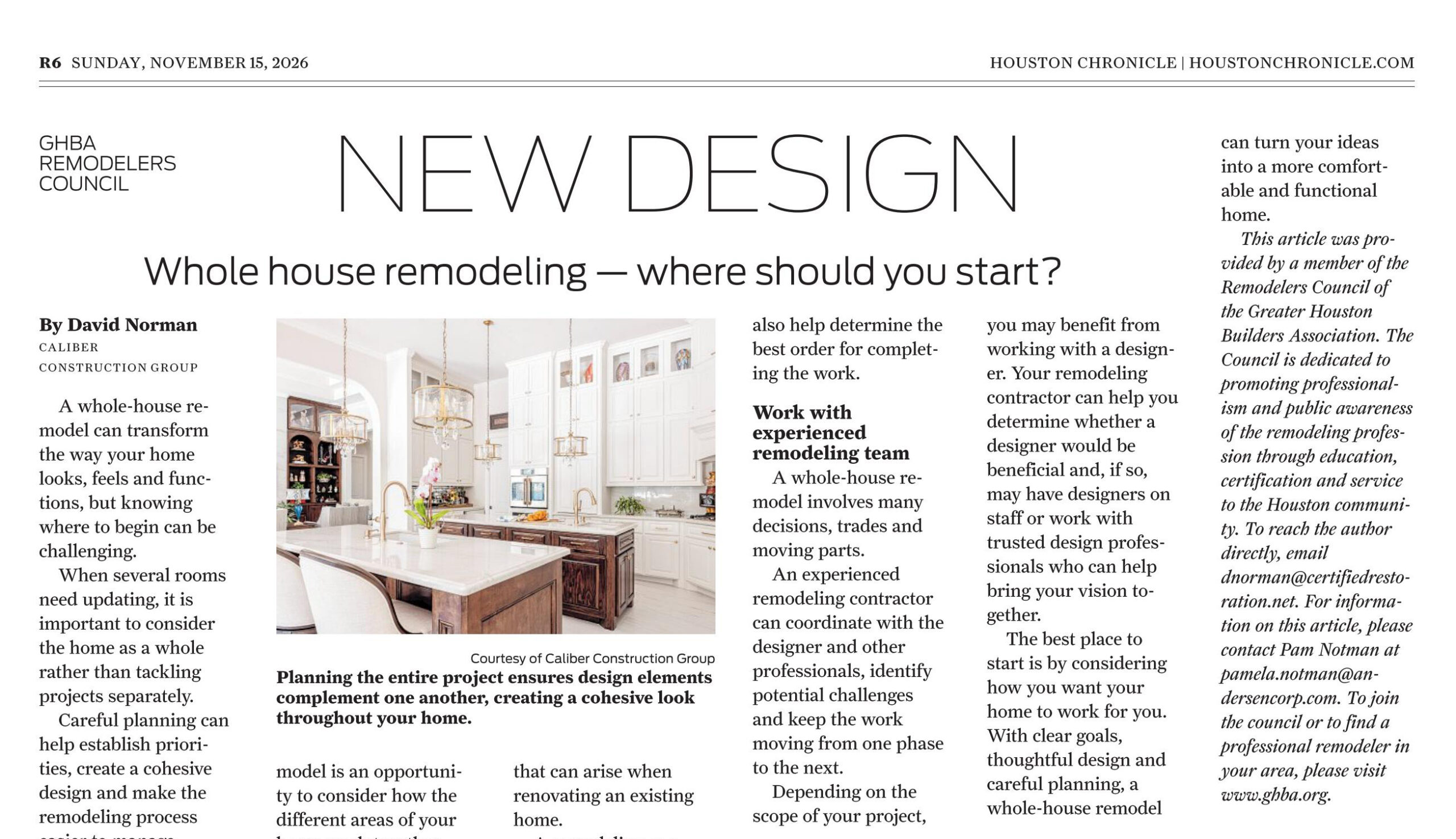
This article was written by David Norman. It was published online and in print in the Sunday edition of the Houston Chronicle on November 15, 2026.
A whole-house remodel can transform the way your home looks, feels and functions, but knowing where to begin can be challenging. When several rooms need updating, it is important to consider the home as a whole rather than tackling projects separately. Careful planning can help establish priorities, create a cohesive design and make the remodeling process easier to manage.
Start With Your Goals
Before choosing finishes or deciding which room to remodel first, consider what you want to accomplish. Is your home too small for your family? Does the floor plan feel disconnected? Are the kitchen and bathrooms outdated? Do you need more storage or better spaces for entertaining?
Make a list of the problems you want to solve and the improvements you would like to make. This will help establish priorities and guide the overall design.
Evaluate the Entire Home
A whole-house remodel is an opportunity to consider how the different areas of your home work together. Look at the layout, traffic flow, lighting, storage and how you use each room.
This is also the time to identify improvements that may not be visible, such as electrical, plumbing, insulation, windows or other aging components. Addressing these issues as part of a larger renovation can help prevent having to reopen finished spaces later.
Establish a Realistic Budget
Once you know what you want to accomplish, establish a realistic remodeling budget. Your budget should account for the scope of work, materials, labor, design services and unexpected conditions that can arise when renovating an existing home.
A remodeling contractor can help you understand potential costs and determine which improvements should be prioritized.
Develop a Plan Before Construction Begins
With your goals, design and budget established, the next step is to create a detailed remodeling plan. This may include changes to the floor plan, kitchen and bathroom renovations, new flooring, cabinetry, lighting, paint and other improvements.
Planning the project as a whole allows the design elements to complement one another instead of making each room feel like a separate project. It can also help determine the best order for completing the work.
Work With an Experienced Remodeling Team
A whole-house remodel involves many decisions, trades and moving parts. An experienced remodeling contractor can coordinate with the designer and other professionals, identify potential challenges and keep the work moving from one phase to the next.
Depending on the scope of your project, you may benefit from working with a designer. Your remodeling contractor can help you determine whether a designer would be beneficial and, if so, may have designers on staff or work with trusted design professionals who can help bring your vision together.
The best place to start is by considering how you want your home to work for you. With clear goals, thoughtful design and careful planning, a whole-house remodel can turn your ideas into a more comfortable and functional home.